


Building or Renovating? The Best Order of Choosing Home Finishes


Building or renovating a home involves dozens of decisions, and many of them seem to demand attention at the same time. Understanding the order of choosing home finishes can make those decisions easier and help prevent delays, mismatched finishes and costly changes. It can be tempting to choose a tile simply because you love the design, order a kitchen because construction is almost finished, or leave doors and wall finishes until the final weeks, but each of these decisions can affect another.
The finishing stage works best when each decision supports the next. We at Floor It understand the process of building your home and with over 14 years experience in the business we’ve seen it all. Measurements, fixed elements, lead times, colour undertones and installation requirements all affect what should be selected first. Understanding those connections helps you plan the project as a complete space rather than as a collection of unrelated purchases.
This guide explains a practical order for choosing the main finishes in your home, while allowing enough flexibility for differences in construction schedules and personal priorities.
Start With the Layout and the Way the Space Will Be Used

Before choosing colours or materials, confirm the purpose and layout of each room. Think about traffic, moisture, sunlight, children, pets, storage and maintenance. A finish that works well in a formal living room may not be suitable for a busy kitchen or rental property.
At this stage, identify fixed features such as plumbing points, electrical outlets, windows, doorways and major appliances. Moving these later can affect cabinetry, flooring quantities and installation schedules.
Make Long-Lead-Time Decisions Early
Custom products should be discussed early because they require more than a quick purchase. A custom kitchen, for example, may involve a site visit, consultation, measurements, design approval, production and installation. At Floor It, custom kitchens typically require approximately 4.5 to 5 months, while modular kitchens generally have a shorter lead time.
This does not mean cabinetry must be installed at the beginning of construction. It means the planning and ordering process should begin early enough for the product to arrive when the site is ready.
Planning your finishes and not sure what should come first?
Visit Floor It with your plans, measurements and inspiration images, and our team can help you understand which selections should be prioritised for your project.
Choose the Main Flooring Direction

Flooring covers one of the largest visual areas in a home, so it often establishes the foundation for the colour palette. Decide whether different rooms will use tiles, SPC vinyl or a combination.
Consider more than appearance. Ask how much traffic the floor will receive, whether water resistance is important, how much maintenance you are comfortable with and what installation conditions are required.
If several rooms will use the same tile or vinyl, calculate the full quantity before purchasing. Buying in phases can create problems if the same design, shade or production batch is unavailable later.
Coordinate the Kitchen, Countertop and Backsplash
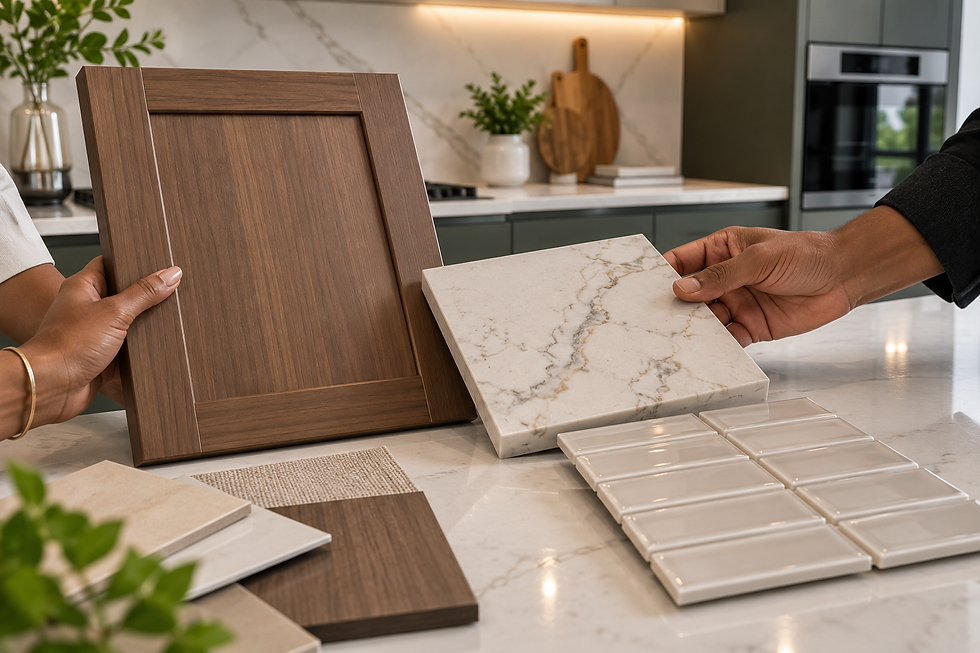
Cabinetry, countertops and backsplashes should be considered together. One does not always need to be purchased immediately after the other, but the colours and patterns must work as a group.
If the cabinet finish is visually strong, a quieter countertop may create balance. If the cabinetry is simple, the countertop or backsplash can become the feature. Samples should be viewed together under the lighting used in the room whenever possible.
Final countertop measurements are normally taken only when the relevant cabinetry and site conditions are ready. Confirm the supplier’s process before setting your installation dates.
Select Doors, Wall Finishes and Trim

Internal doors, decorative wall panels, mouldings and paint help connect the larger selections. Door colours should relate to the flooring and cabinetry rather than being chosen in isolation.
Wall finishes can then be used to add depth, texture or contrast. Decorative panels may be practical where easy maintenance, moisture resistance or a faster transformation is important, while paint remains useful where flexibility and frequent colour changes are priorities.
Confirm Site Readiness Before Installation
The best product can still produce a disappointing result if the site is not ready. Before installation, confirm that wet work is complete, surfaces are level and dry, openings are finished, utilities are positioned correctly and other trades will not damage newly installed materials.
The exact sequence may vary by project, but the guiding principle is consistent: plan connected decisions together and order long-lead items early.
The Recommended Order of Choosing Home Finishes

1. Confirm layouts, room functions and fixed service points.
2. Begin consultations for custom kitchens, closets and other long-lead products.
3. Decide on the main flooring materials and quantities.
4. Coordinate cabinetry, countertops and backsplashes.
5. Select doors, wall panels, mouldings and paint colours.
6. Confirm delivery, site-readiness and installation dates.
Planning in this order reduces last-minute compromises and helps the entire home feel intentional. If you are unsure where your project should begin, bring your plans, measurements, inspiration images, and expected timeline when visiting a showroom. A productive first conversation should help you identify the decisions that need to be made now and those that can be put off.
Building or renovating? Start making your finish selections before the final stages of construction.
Visit Floor It at 159 New Garden Street, Queenstown, Georgetown to explore flooring, kitchens, countertops, doors and wall finishes for your space.


Comments